
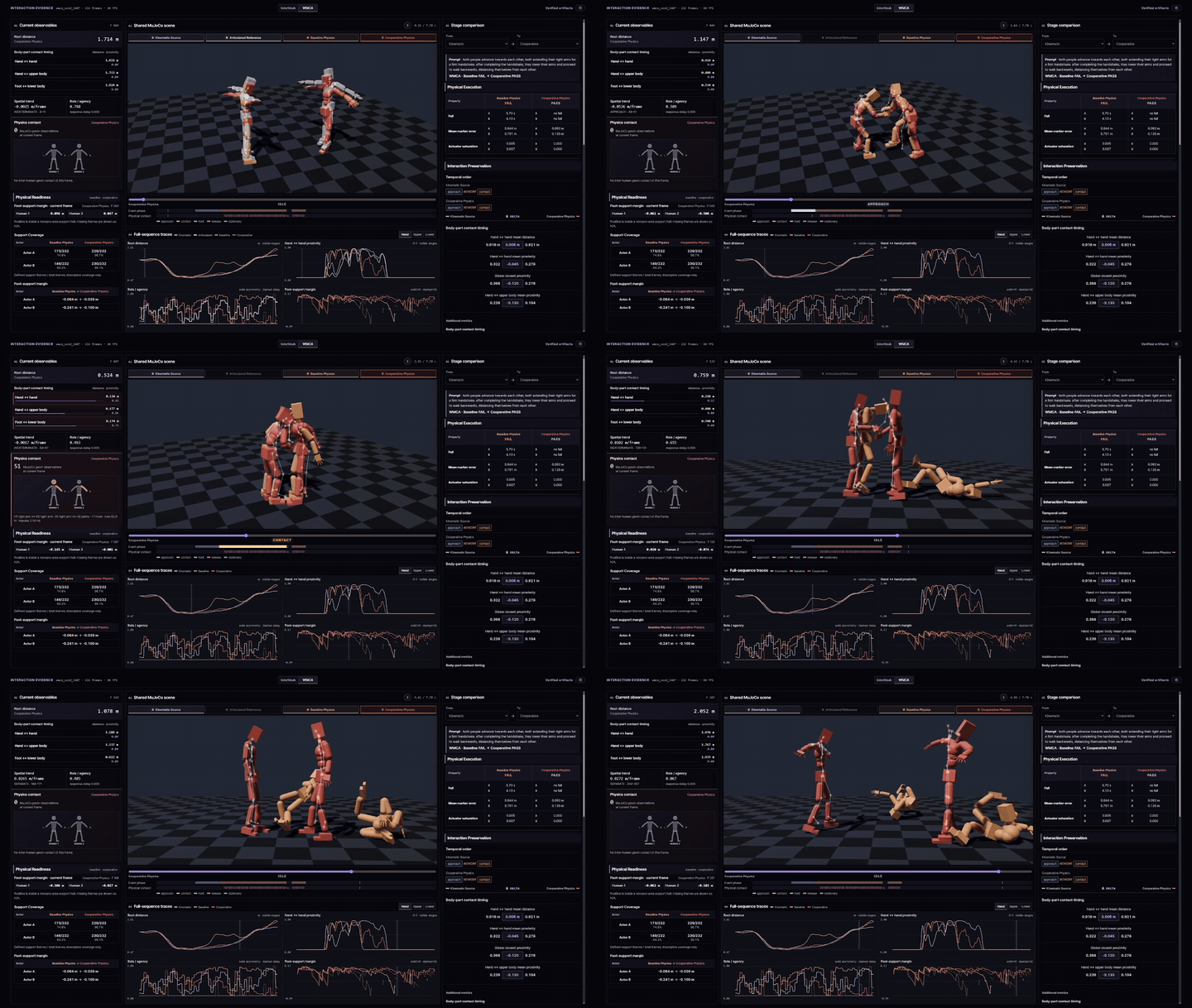
Python · Text-to-Motion · Motion Visualization · Computer Graphics
ParTY — CVPR 2026 (Co-author)
Part-guided text-to-motion research where I built and refined the qualitative visualization pipeline used to compare generated human motion.
Research Context
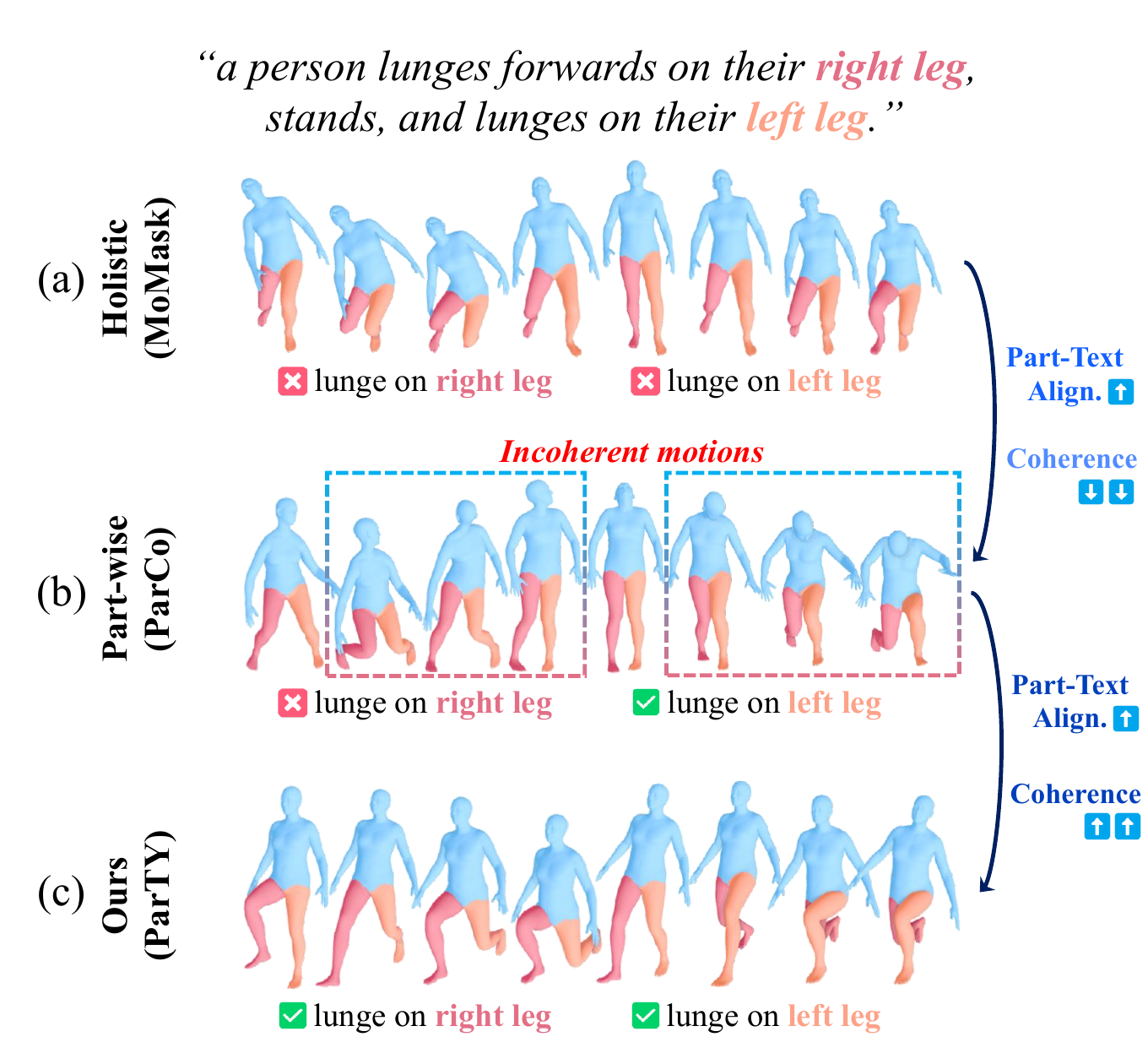
ParTY is a CVPR 2026 text-to-motion paper on part-guided motion generation, where the model needs to reflect body-part-specific prompts while keeping the full-body motion coherent.
- The qualitative figures needed to show whether each model actually followed part-level instructions in the generated human motion.
- This made visualization quality important: unclear renders would make it harder to compare body-part behavior, motion direction, and failure cases.
- I focused on the qualitative visualization side of the paper, especially how generated motions were rendered, compared, and prepared for figures.
My Contribution
I worked on the motion visualization and qualitative comparison process used in the paper.
- Rendered the human motion outputs used in the paper’s qualitative figures, including comparisons across HumanML3D, MoMask, ParCO, and ParTY settings.
- Improved lower-quality baseline renders into figure-ready outputs through clearer body-part coloring, controlled camera setup, SSAO, anti-aliasing, and high-resolution rendering.
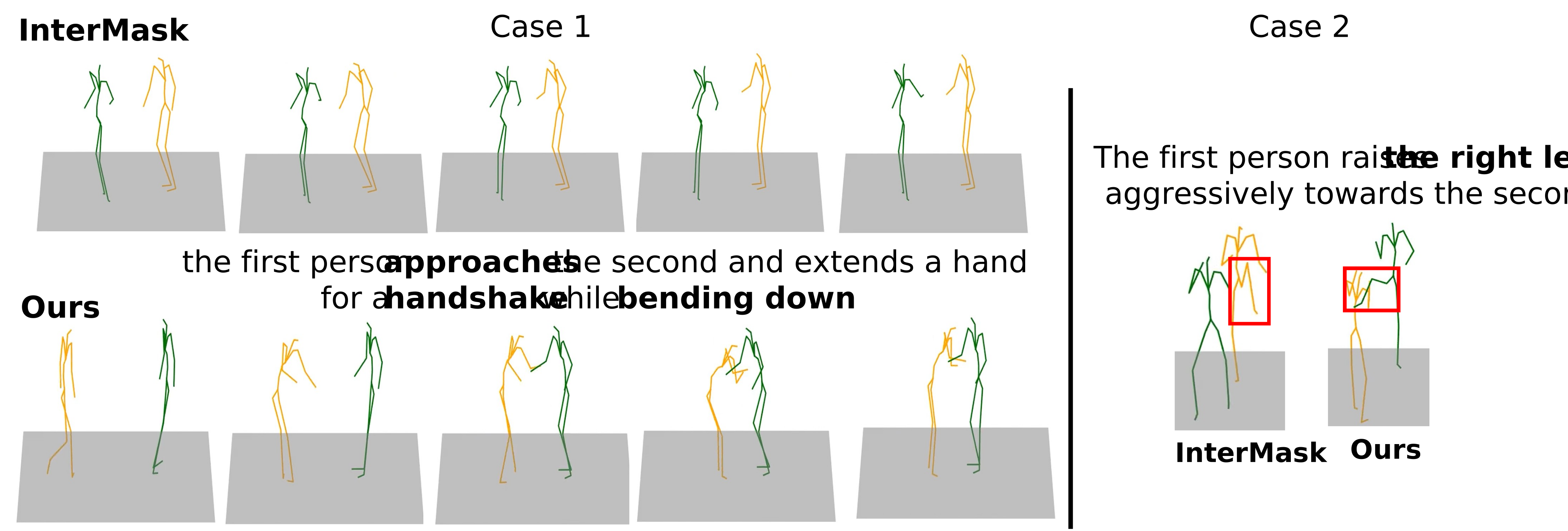
- Compared model outputs under matched prompts and seeds, then prepared visual materials and crops so model differences and failure cases could be shown clearly in the paper.
Visualization Comparison
The paired motion renders show the baseline and improved figure-ready visualization.
Output
The work contributed to the qualitative comparison materials used in the final ParTY paper.
- Paper: ParTY: Part-Guidance for Expressive Text-to-Motion Synthesis.
- Venue: CVPR 2026.